Why are Piksters so popular?

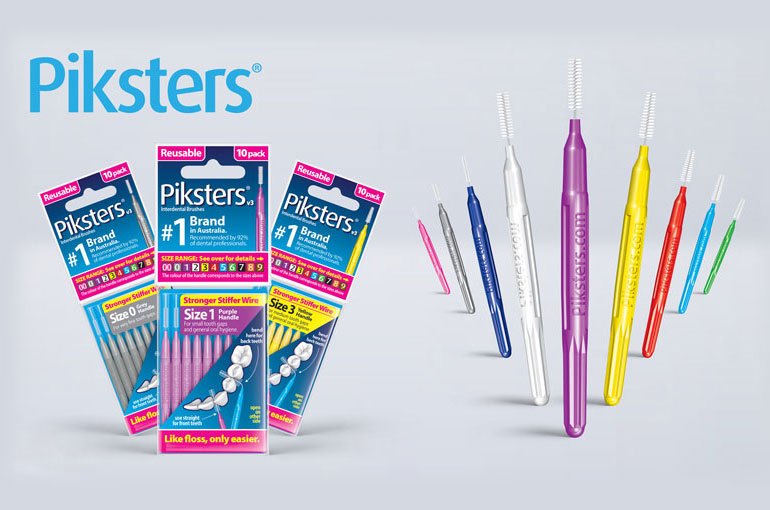
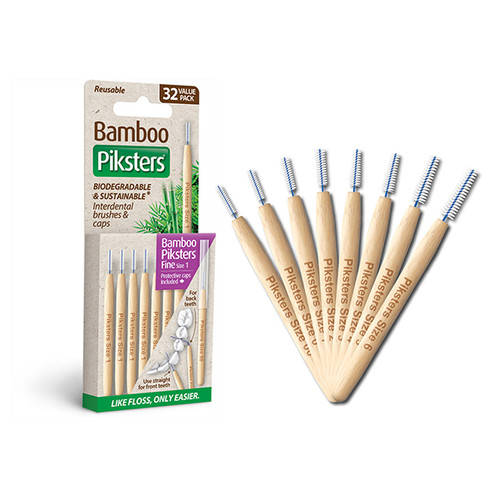
Piksters come in small sizes that fit more people!
Piksters are easier than flossing - and MUCH easier than using floss threaders under bridges. Just 'grab and go' ... Piksters have their own cap and fit comfortably in your pocket.

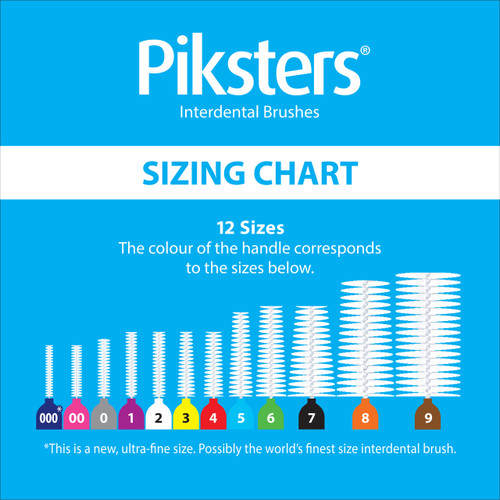
Piksters come in 8 sizes so there is one for everybody ... even those with very tight teeth. Piksters were voted Number 1 "most used/recommended" interdental brush by an overwhelming majority of dentists responding to a survey[1]. Dentists also say that their patients love Piksters. When we asked dentists "how did your patients react to Piksters?", more than 50% said they reacted 'significantly more positively than with other brands of interdental brushes', while a further 24% reacted 'very enthusiastically'. The main reasons cited were variety of sizes, cost effectiveness and durability.

Piksters are reusable

Just like a normal toothbrush, you can wash the bristles out under running water and re-use your brush. It will last up to 2 weeks per brush, depending on how hard you use it and how much you bend the wire. Patients often comment on how much more durable they are than others they have tried.

Piksters interdental brushes have the following advantages- 

  • Strong, stiff, plastic coated wire. If you have used interdental brushes before you may notice a difference in the way Piksters do not buckle or bend as much as some. 
  • Nylon 612 filaments on most sizes. This is the highest grade of nylon filament available and as a result many patients report that the brushes last longer. 
  • Economically priced. Piksters sometimes cost about half to one quarter the price of other well known brands, depending on the country and market. They are sold in packets of 10 or even more economical boxes of 40. For daily use, these brushes need to be affordable...that is the Pikster philosophy. 
  • “Twisty” handle. This allows the user to rotate the brush on and after insertion.
  • Each brush has its own handle and cap so there is no need to fiddle with putting a new brush into a handle, as with some other brands. Piksters also come in a single size (5) refill head for use in other brands of toothbrush type handles that will accept standard refill heads...these are useful for patients who require large handles but who like the cost effectiveness of Piksters
  • Piksters are small enough to be kept in your pocket, wallet or purse without causing bulkiness, enabling you to have it handy when you need it. 
  • Piksters come in a range of 8 sizes for all situations. 
  • Piksters are an Australian designed and owned product, sold in 17 countries.

TOP OF PAGE


Piksters are a brand of interdental brush. the following is general information about interdental brushes and how they relate to gum disease and oral hygiene.

What are interdental brushes and where are they used?

Interdental brushes are small circular toothbrushes that you insert into the spaces between your teeth to clean the difficult areas. They are generally used for normal cleaning, sometimes as an alternative to floss and sometimes as an adjunct to floss. They are much easier to use, especially under bridges, so compliance is easier to achieve. They can also be used under orthodontic wires or between splinted teeth that cant be flossed and anywhere a toothbrush cannot reach.

But I brush my teeth...why do I need to clean the space between my teeth? 

Although the space or gap between your teeth conseals only about 40% of the tooth surface, it accounts for about 80% of the problems. By cleaning the space you get a huge and disproportionate advantage in stopping decay and gum disease. Problems in the space can be serious because they often go unnoticed. This is the reason most X-rays are taken – to check for decay in the space and to catch it early. By cleaning the gap, you not only reduce your chance of dangerous decay, root canal treatments and crowns, but you substantially reduce your chance of serious gum and bone disease around the chewing teeth.

Is gum disease really that serious… don't the gums just heal? 

The gum itself is not the problem or the issue. The gum merely covers the bone and the bone is what holds your tooth in. When the gum gets inflamed and infected, it slowly eats away the bone... because this is not painful a lot of people don't even notice it happening and may not know until it is almost too late to save the tooth.

How do I tell if my gum is inflamed or infected? 

The best early warning sign is to see if the gum bleeds on gentle probing by the dentist or hygienist. It is critical that the gum doesn't get infected or inflamed for long periods. Interdental brushes will stop the gum bleeding with time by removing the cause, which is the ‘plaque'. Get your gums checked every 6 months to assess what state they are in.

What about floss? How does it compare to interdental brushes? 

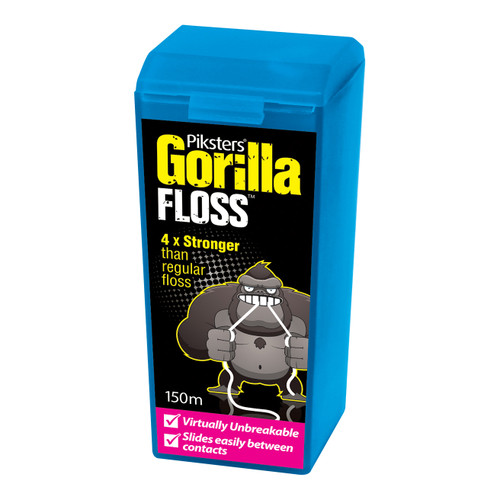
Floss is an excellent way to clean the gap and if you already floss you should definitely not stop. The problem is that most people don't floss...probably because they find it too awkward to use. Interdental brushes can be used with one hand, which makes them easier and more likely to be used. Floss is superior in some areas...such as the front teeth. It gets down under the spike of gum in between the teeth. But in other areas, interdental brushes may be better, such as the indents (or hollows) between the roots of your molars and premolars. These areas are called ‘furcations'. Floss forms a straight line across the top of the furcation, whereas interdental brushes have bristles under compression that spring out sideways to clean these hollows. Gum disease and decay between the back teeth is a bigger problem than in the front teeth...as evidenced by the millions of people who have many missing back teeth but still have their front ones relatively in tact. Interdental brushes address the most important issue, the back teeth, and make effective cleaning easier and more likely to happen.

Are interdental brushes only for unhealthy or inflamed gums? 

No, they can be used for daily plaque control on healthy or inflamed gums in conjunction with your normal toothbrush. They are also an excellent aid for those who wear orthodontic wires or teeth that are splinted (wired together) for orthodontic retention or for periodontal support, because they clean between the teeth under the wires where it is hard to get floss. Implants need special care, as do bridges. Plastic coated interdental brushes are very good for these areas as they can clean around the artifical teeth without damaging them, and are quick and easy to use. Floss needs an awkward floss threader to use around bridges and splinted teeth.

What size should I use? 

You can ask your dentist or hygienist what size/s they would recommend. Alternatively, you can often buy a variety pack with one of each size so you can experiment to see what size fits most comfortably into the various spaces you have in your mouth.

Do I use the biggest size I can get between my teeth? 

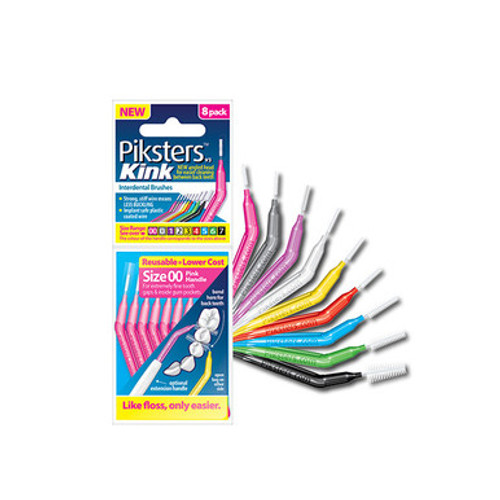
Generally speaking, use larger sizes for back teeth and the small ones for the front teeth. For back teeth, use the biggest size you can comfortably get in as it will provide a more thorough cleaning action and suppress the gum from growing up excessively in between your teeth. Such excessive growth can cause a natural food and plaque trap which leads to a self degenerating situation. IMPORTANT – Please Note: All interdental brushes, toothpicks and sticks can put pressure on the tip of the gum, especially if you force it, or use a brush that is too big for the space. This can cause a slight re-shaping of the gum over time. This is generally good for back teeth but most people like the look of the small triangle of gum growing inbetween their front teeth. Therefore, use the smallest size around your smile area in order to ensure a gentle cleaning action on these cosmetically sensitive areas, or if in doubt use floss instead. Note that you will do no harm if the gum reshapes slightly – it is just a minor cosmetic issue. If you are not worried about the cosmetics, use any size that you can comfortably get in between your teeth. Caution – Although you can bend the wire for easier access into back teeth areas, do not bend the wire back and forth too often as it will weaken the wire and eventually cause it to break...sometimes in as little as 5 bends. If it does break and leave the brush piece in between your teeth, use your fingers to remove it or use another brush to push it out.

How long do interdental brushes last? 

Generally in a range of 3 days to 2 weeks, depending on which brand you use and how hard you work it. 

Do I throw them out each time or can I reuse them? 

Like normal toothbrushes you can wash them out and re-use them until the bristles deteriorate or the wire has been bent severely many times. If you prefer, you can dispose of them after a single use. 

How often should I use interdental brushes? 

Interdental cleaning is probably only necessary once a day but there is no reason why you couldn't do this as often as you wanted to. Unlike a toothbrush you can keep an interdental brush in your pocket and use it in many situations where it would not be suitable to brush – especially after meals where you can't access a bathroom or use a conventional toothbrush.

What happens if my gums bleed when I start using interdental brushes? 

Do not be concerned. It will stop in a week or two. It is usually due to pre existing inflammation in the gums which causes weakening of the blood vessels. The primary cause of this bleeding is insufficient plaque removal, which is in turn due to ineffective brushing and ineffective cleaning. If you remove the plaque, the source of the problem is removed. Bleeding is usually a sign that you are NOT DOING IT ENOUGH. When you do brush enough, the gum will heal, toughen up, and won't bleed when gently rubbed. Please speak to your dentist or hygienist if any bleeding continues – you may have a ledge of calculus or tartar under the gum that catches plaque. This ledge is a hard, rocky material that needs removal by a dental professional…a toothbrush won't remove it. 

What do you mean ‘ineffective brushing'? – isn't all brushing the same? 

What really causes decay and gum disease is the nearly invisible, sticky white paste called plaque that forms in lumps on the teeth and gums every day. Wherever plaque stays for long periods, you are almost certain to get decay and/or gum disease. Not only does it have the ability to eat holes into teeth, it also severely irritates the gum, causing the body to send in repair cells and bacteria-attacking cells that accidently destroy the bone...and this leads to even bigger problems until the tooth falls out.

You need to brush and clean effectively. Many people put a brush in their mouth and make random movements – and imagine they have cleaned their teeth. In reality they typically only remove 50% of the plaque – and the places where the remaining 50% stays are covered 99% of the time. It is these sites where you can expect 99% of your dental problems to occur. The gap between your teeth is a huge source of problems, because it is naturally protected and hidden from the cleaning action of the tongue and abrasive action of food. When we clean teeth it is not like we are cleaning our shoes to make them look good. ‘Cleaning' is an insipid word and could be replaced by the more accurate expression ‘removal of toxic bacteria and congealed acidic material'...that is what plaque is. ‘Cleaning' is defined as the removal of the majority of the plaque – not simply removal of food scraps. Although it is nice to get rid of food debris, this is not the real reason for ‘cleaning'. You need to ask your dentist or hygienist to show you if you are really cleaning effectively. They can reveal the plaque you thought you got rid of, but didn't.

When I get my teeth ‘cleaned' by the dentist, are they just removing plaque?

No...plaque will stick to the teeth and calcify to form a rock-like material called calculus...you can't get this off, and it needs to be removed with ultrasonics or hand instruments. If you have periodontal pockets, they need to be cleaned out too. Depending on the extent of the disease process and bone destruction, this can be a simple or a complex job requiring many visits, and may need local anaesthesia (an injection), just like a filling. 

What are periodontal pockets? 

Periodontal disease can painlessly destroy the bone between and around your teeth, whilst the gum on the outside remains at the existing height. This creates an invisible space where plaque and dangerous bacteria can be sheltered from the cleaning action of your normal toothbrush. These areas are called periodontal pockets. Many people have these invisible pockets or gaps between their gum and tooth. Normally the gap between the tooth and the gum is 2-3mm deep. If periodontal disease sets in that can increase to 5 or 6mm and at this point it usually becomes self degenerating. At 8-9mm, the outlook for the tooth is very poor. The deeper the pocket, the harder it is to stop it getting worse! That is why we practice preventive dentistry. Ask your dentist or hygienist to check your pocket depths and advise what should be done, if anything.

What can be done if I have periodontal pockets between my teeth? 

Ask your dentist if a simple, often nearly painless procedure should be performed which involves removal and re-contouring of small amounts of gum (a ‘gingivectomy' or a ‘papillectomy'). This will open up the plaque trap and enable you to get an interdental brush into the area which was previously impossible to clean. Use the biggest one you can comfortably get into the gap. You will be amazed by the improvement in the condition of your gums that will follow. Sometimes the disease process has gone to the point where the bone has changed into a shape that is not in your best interests. You need to get your bone reshaped to create self cleansing, not self-contaminating and self destroying contours. Food and plaque should be easily removed from between your teeth, not caught in traps created by the disease process. Although this sounds painful, it is not really that bad and the benefits far outweigh the temporary discomfort. It may actually save your teeth or at least extend their useful life. Talk to your hygienist, dentist or periodontist about the benefits of gingival and osseous restoration and periodontal pocket reduction surgery.

TOP OF PAGE

[1] Micromex Marketing Services: 388 respondents. 44% rated Piksters Number 1, compared to the nearest 3 competitors at 15%, 14% and 8% respectively.)